Right Thomas William (RTW) Roberts Jr.
July 25, 1861 – April 5, 1940
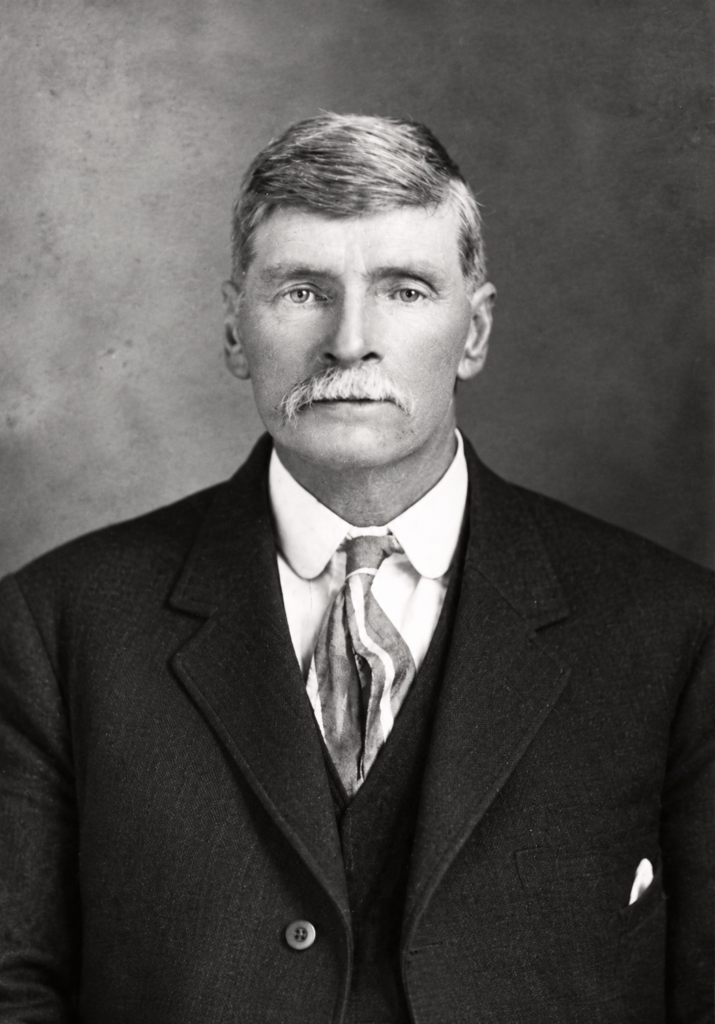
“A farmer, banker, patriarch, and community leader whose influence shaped generations of Roberts descendants throughout the South Carolina Lowcountry.”
Quick Facts
| Full Name | Right Thomas William Roberts Jr. |
| Born | July 25, 1861 |
| Birthplace | Colleton County, South Carolina |
| Died | April 5, 1940 (Age 78) |
| Place of Death | Coosawhatchie, Jasper County, South Carolina |
| Burial | Gillisonville Baptist Church Cemetery, Jasper County, SC |
| Parents | Right Thomas William Roberts Sr. and Adeline M. Carter |
| First Wife | Julia Ann Lyons b. May 11, 1855–d. Jul 6,1909 (Age 54) |
| Children | Joseph Wiley Roberts Sr, b. Mar 24, 1882-d. Dec. 28, 1944 William R Roberts, b. Mar 1884-d. Sep 26, 1925, Annie A Roberts Hiott, b. Feb 14, 1886-d. Nov 15, 1964 Lugia Roberts Horton, b. Nov 27, 1887-d. Apr 24, 1963 Pollie N Roberts, b. Apr 20, 1895-d. Sep 20, 1915 |
| Later Wives | Carrie E. Weekley, b. June 2, 1869-d. Dec 31, 1923 (Age 54) Betty Steedly, b. Jan 17, 1880-d. Nov 3, 1937 (Age 57) |
| Occupations | Farmer, Landowner, Commercial Bank Director |
| Known For | Business Leadership, Community Influence, Church Service, Family Patriarch |
Early Life
Right Thomas William Roberts Jr. entered the world during one of the most turbulent periods in American history. Born on July 25, 1861, only months after the outbreak of the Civil War, he began life amid uncertainty and conflict. Tragically, his father, RTW Roberts Sr., died during the war when Thomas was still an infant. As a result, he was raised by his widowed mother, Adeline Carter Roberts, during the difficult years of Reconstruction.
The South Carolina of his childhood was struggling to recover from war, economic hardship, and political upheaval. These circumstances helped shape a man known for determination, discipline, and resilience.
Marriage & Family
In 1881, Thomas married Julia Ann Lyons, a woman whose family roots stretched deep into the historic St. Bartholomew Parish of Colleton County. Together they established the foundation of what would become a large and influential family. Julia helped manage the household, raise their children, and support the family’s growing agricultural operations.
Following Julia’s death in 1909, Thomas later married Carrie E. Weekley and eventually Betty Steedly, blending multiple Lowcountry families into one expansive household. Over the course of his life, he fathered children across several decades, creating a family network that stretched across generations.
Among his children was Joseph Wiley Roberts Sr., who would continue the family’s legacy of faith, leadership, and community service.
Building a Life in the Lowcountry
As a young man, RTW Jr. established himself as a successful farmer in Colleton County. Through hard work and careful management, he expanded his agricultural operations and became one of the area’s respected landowners.
Unlike many farmers of his era, Thomas possessed a keen business mind. As South Carolina entered a new age of commerce and industry, he adapted to changing times and expanded his influence beyond agriculture.
His ability to navigate both farming and finance allowed him to become one of the region’s most prominent citizens.
A Leader in Banking and Business
Thomas eventually became a Commercial Bank Director in Jasper County, placing him at the center of local economic development. During a period when many rural communities depended on agricultural loans and credit, bank directors played a critical role in determining which farms and businesses survived difficult times.
His leadership helped support the transition from an isolated agricultural economy to a more connected and modern society. Railroads, commerce, and banking were reshaping the Lowcountry, and RTW Jr. stood at the forefront of that transformation.
While some viewed him as strict or demanding, those traits were often necessary for managing both a successful business career and a large family during challenging economic periods.
The Patriarch
Few men carried the responsibility that RTW Jr. did.
He presided over a sprawling household that included children, stepchildren, grandchildren, and extended relatives. Managing such a large family required structure, discipline, and strong leadership. Family stories suggest he ruled his household with firm expectations and little tolerance for idleness.
To later generations, he became remembered as both respected and formidable—a man who expected excellence and worked tirelessly to provide opportunities for those who followed him.
The Famous Valentine’s Gala of 1912
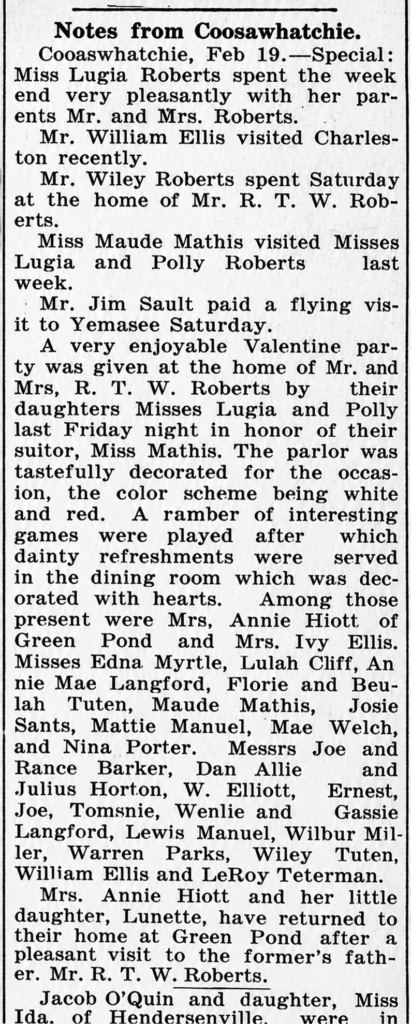
One of the most colorful stories connected to RTW Jr. occurred on February 16, 1912, when his family hosted an elaborate Valentine’s Day celebration at their homestead. Organized by his daughters, the event drew guests from neighboring communities and became a memorable social occasion in the region.
Decorated with handmade red-and-white decorations and featuring games, entertainment, and elegant dining, the gala was significant enough to be reported in local newspapers. It reflected both the hospitality and prominence of the Roberts household during the early twentieth century.
Historical Context
Thomas lived through an extraordinary period of American history:
- The Civil War
- Reconstruction
- The Rise of Railroads
- The Industrial Revolution
- World War I
- The Great Depression
Although he did not serve in either the Civil War or World War I because of his age, he contributed through civic leadership, agricultural production, and support of local communities during times of uncertainty.
Character & Legacy
RTW Roberts Jr. was a product of survival. Losing his father as an infant and growing up in a devastated post-war South taught him lessons that remained with him for life. He became known as a disciplined, practical, and highly protective man whose decisions were often shaped by responsibility rather than sentiment.
Whether managing farmland, making financial decisions as a bank director, or leading a large family, he carried the weight of leadership throughout his life.
His influence extended far beyond his own generation. Through his children, grandchildren, and great-grandchildren, he became one of the central figures from whom much of the modern Roberts family descends.
Legacy
When Right Thomas William Roberts Jr. passed away on April 5, 1940, he left behind an enormous family network and a lasting impact on the communities where he lived and worked. He was buried beneath the oaks of Gillisonville Baptist Church Cemetery, where his memory remains intertwined with the history of Jasper County.
Today, he is remembered as the great patriarch of the modern Roberts family—a man whose leadership, determination, and vision helped carry the family from the hardships of Reconstruction into the modern twentieth century.
Timeline
July 25, 1861 — Born in Colleton County, South Carolina
1862 — Lost his father during the Civil War
1881 — Married Julia Ann Lyons
1882 — Birth of his son, Joseph Wiley Roberts Sr.
Late 1800s — Expanded farming operations throughout Colleton County
Early 1900s — Became a Commercial Bank Director
1906 – 07, 11, 24, 26 – Served as delegate to Savannah River Baptist Association, Gillisonville Church
1909 — Death of first wife, Julia Ann Lyons
1912 — Hosted the famous Valentine’s Gala
1916 – Served as Deacon, Gillisonville Baptist Church. * During the time that he served as deacon a dispute arose in the church and
RTW padlocked the church until other folks saw things his way.
1921 – 1926 – Served as Church Treasurer, Gillisonville Baptist Church
1930s — Operated farmstead in Coosawhatchie
April 5, 1940 — Passed away at age 78
Burial — Gillisonville Baptist Church Cemetery, Jasper County, South Carolina
“Strong roots create strong branches.”
RTW Roberts Jr.’s story is not merely one of personal success. It is the story of a man who carried a family through changing times and
established a foundation upon which generations of Roberts descendants continue to build.